Care in the Classroom: The Impact of Nurturing Professionals in Early Childhood Education
Many entering the early childhood field do so because they feel a connection to young children. They identify that time in life with new experiences and the joy of learning. However, the role of an educator is markedly different than that of a parent or another caretaker. Often, those new to the field struggle to strike a balance between when to be caring and nurturing and what place that behavior has in the classroom.
Traditional education models often left educators in a didactic role, as classroom leaders, but not necessarily empathetic figures. However, Maslow’s hierarchy of needs states that children’s needs must be met before they can focus on learning — physiological needs, safety, love and belonging, esteem, connection to others, or self-actualization.
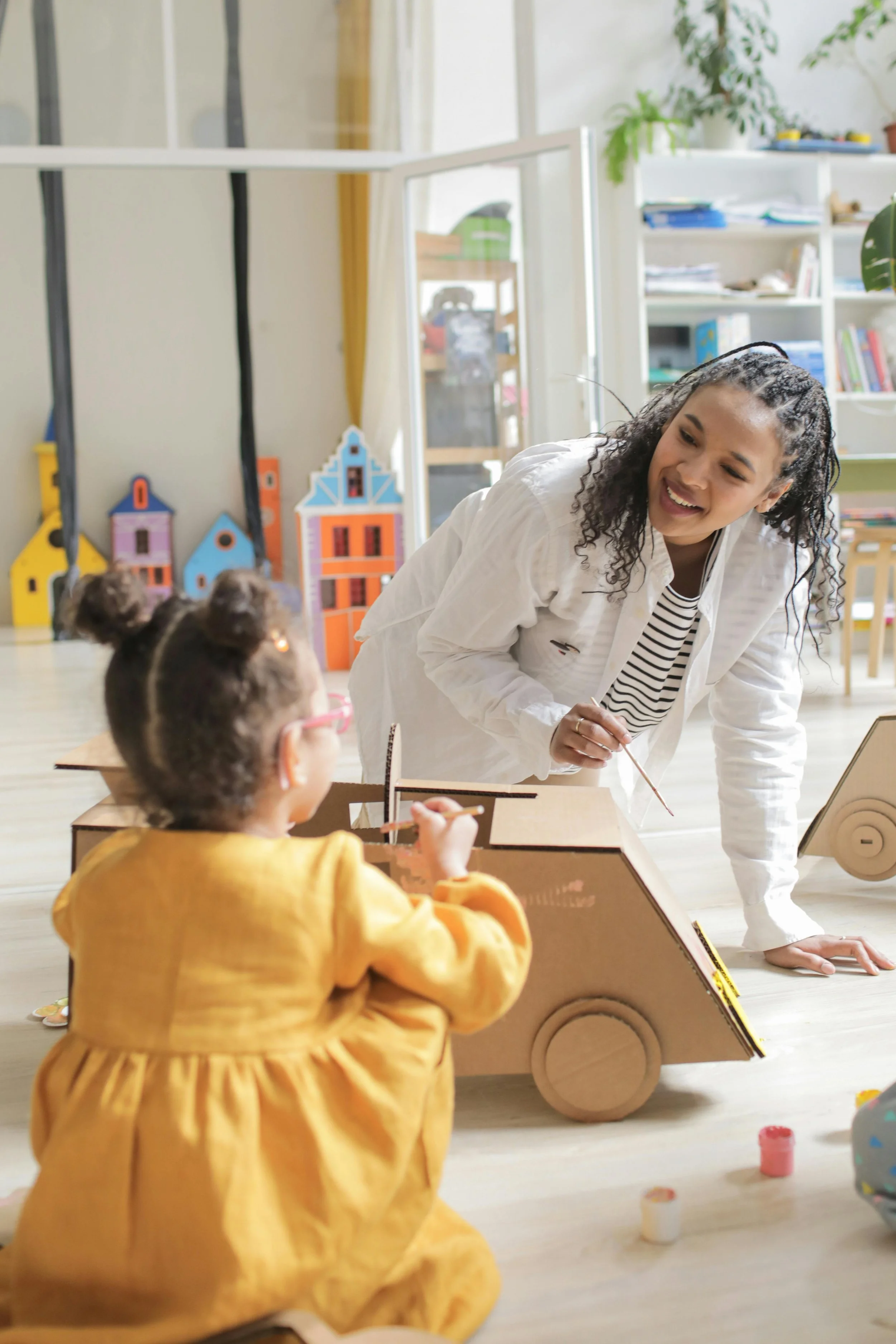
It’s important for teachers in early childhood education settings to understand that maintaining a sense of care makes a difference for our youngest learners. “Caring as an attribute in relationships, especially with young children, promotes effective social and cognitive competencies. (Phatudi, 2017).
This also speaks to the pivot from classroom environments centered on teacher and classroom activities to child-focused classrooms. As teachers understand where to take the lead and where to follow the cues of children, we’re understanding the social-emotional element comes into play in different areas of classroom life.
Another challenge teachers face when incorporating nurturing in the classroom is the opposite end of that spectrum: ensuring they still bring a supportive nature to the most challenging students. In early childhood education, a student may be deemed “challenging” for a number of reasons. There could be children who bring familial issues or other home-life challenges to the classroom. In some instances, especially in early childhood, an undiagnosed condition can lead to behavior that’s hard to identify and therefore address. Some students present difficulties with different boundaries or a lack of boundaries at home that aren’t conducive to positive classroom behaviors.
As educators, we come into the classroom with a focus on our students, but we, too, can bring external stressors into our professional lives. For this reason, it’s just as important for educators to work on managing stress both inside and outside the classroom.
“Research has demonstrated that early childhood teachers may deal with highly stressful emotional situations in ways that compromise their ability to create and maintain quality learning environments and to provide support to the children under their care, there is a paucity of research aimed at understanding and supporting teachers’ social and emotional competence and well-being as means of promoting resilience and improving their performance and the performance of their students.” (Jennings, 2015, p. 9).
As different stakeholders work together to develop classroom environments that meet the needs of all students, the element of caring will become a bigger piece of the puzzle. Educators are responsible for helping develop the social-emotional foundation that children will carry forward in education and in life, and that will involve caring both for the student and for themselves, bringing our best selves to the classroom each day.
References
Jennings, P. A. (2015). Early childhood teachers’ well-being, mindfulness, and self-compassion in relation to classroom quality and attitudes towards challenging students. Mindfulness, 6(4), 732–743. https://doi.org/10.1007/s12671-014-0312-4
Phatudi, N. (2017). “You should give a child love and take them warm-heartedly from their parent”: Preschool teachers’ practice and understanding of care. Perspectives in Education, 35(1).